NFA Changes October 2026: ATF Ends Registration for Suppressors, SBRs, SBSs & AOWs

In August we told you the NFA was changing but that registration was still the rule for nearly everyone. That has now flipped. On October 9, 2026, ATF announced that it will no longer require NFA approval or registration for suppressors, short-barreled rifles (SBRs), short-barreled shotguns (SBSs), and “any other weapons” (AOWs), and that applies nationwide, not just to the people who sued. Here is what changed, what did not, and what it means if you shoot suppressed or run a short barrel.
These items can now be transferred through a licensed dealer on a Form 4473 with a NICS background check. No Form 4, fingerprints, photos, or months-long wait.
Still fully under the NFA: machine guns and destructive devices ($200 tax and all NFA requirements remain).
Still applies: the Gun Control Act, state and local law (suppressor bans, state Form 4 rules), and ATF’s Form 20 guidance for taking SBRs and SBSs across state lines.
This is an enforcement policy, not a repeal of the NFA.

How We Got Here: Three Steps in 2026
January 1, 2026: The “One Big Beautiful Bill Act” (H.R. 1) cut the NFA making and transfer tax on suppressors, SBRs, SBSs, and AOWs from $200 to $0. Registration and approval were still required.
August 5, 2026: A federal judge in the Northern District of Texas ruled in Silencer Shop Foundation v. ATF that once the tax was zeroed out, the NFA’s making, registration, and transfer rules for these items could no longer be justified under Congress’s taxing power. The injunction itself protected only the plaintiffs and the groups tied to the case.
October 9, 2026: With the Department of Justice not appealing, ATF issued an open letter and FAQ using enforcement discretion to extend the same treatment to everyone. Coverage from Concealed Carry Inc and USA Carry walks through the details.
What Changed for Suppressors, SBRs, SBSs & AOWs
ATF will no longer require prior approval to make or transfer these items, will no longer require registration in the National Firearms Registration and Transfer Record, and will not enforce the NFA criminal provisions for unregistered items of these types. In plain terms, buying a suppressor now looks a lot more like buying any other firearm: you fill out a Form 4473, the dealer runs the NICS check, and if you pass, you take it home. The Form 4 packet, fingerprint cards, passport photos, and the wait that came with them are no longer required for these items.
For SBRs and SBSs, ATF says it will not enforce the Gun Control Act dealer-transfer restriction on them until new rules and forms exist, so dealers can currently transfer them on a 4473 as well.
What Is Still in Effect
This is the part that trips people up. The headline is big, but a lot of rules still apply. Here is what remains in force:
Machine guns and destructive devices
These stay fully under the NFA: the $200 tax, Form 4 approval, and registration all still apply. Possessing an item with an obliterated serial number or an illegally imported NFA item is still an NFA offense, and manufacturers, importers, and dealers still owe the Special Occupational Tax.
State and local laws
ATF’s change is federal only. Suppressors remain banned in several states and the District of Columbia (including California, Delaware, Hawaii, Illinois, Massachusetts, New Jersey, New York, and Rhode Island), and about 15 more states still require a federally approved Form 4 for legal possession, according to the NSSF. SBR and SBS rules vary by state as well. If your state ties legal ownership to NFA registration, an unregistered item may still put you in violation of state law. ATF has not said how states will treat unregistered items, so check before you buy.
Crossing state lines with an SBR, SBS, or suppressor
ATF still points owners to Form 20 before taking an SBR or SBS across state lines. And your destination matters more than ever: driving a suppressor or short-barreled rifle into or through a state that bans or restricts it is still a state-law problem no matter what ATF does. Before any trip, check the laws of every state you will pass through or stay in, and do not assume a federal change covers you there.
Who can buy: the Gun Control Act
Suppressors, SBRs, SBSs, and AOWs are still “firearms” under the GCA. Prohibited persons still cannot possess them. Dealers still run a 4473 and NICS check, follow their state’s law, and sell in-state under the usual rules for firearm purchases.
Registration is optional, and removal is a one-way door
ATF still accepts Forms 1, 3, and 4 at the $0 rate, and some owners will keep filing, especially where state law depends on federal registration. An item removed from the registry cannot be re-registered unless a future amnesty allows it, so talk to a firearms attorney before you de-register anything.
It is policy, not a repeal
The NFA is still on the books. A future ruling, a change in ATF guidance, or new legislation could change the picture, and the Texas decision does not bind other courts. We will update this page as things develop.
What This Means If You Shoot Suppressed
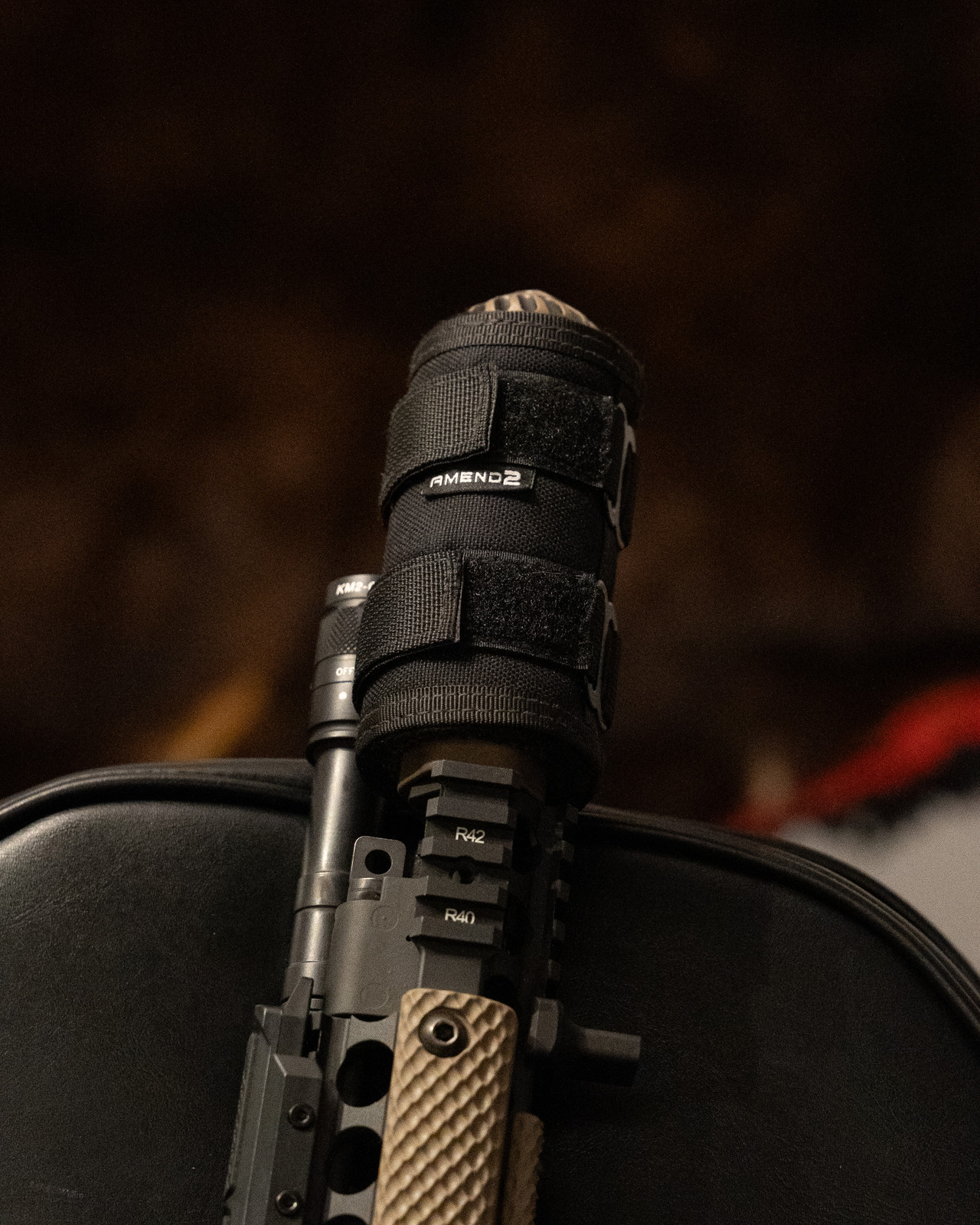
Lower cost, no stamp, and no waiting means a lot more suppressors on a lot more rifles. That also means more people running into heat mirage, the shimmer that rises off a hot can and bends your sight picture through a scope. The Amend2 Mirage Cover wraps the suppressor in a 1000D CORDURA® shell over a dual-layer fiberglass-and-silicone heat sleeve to cut that distortion during sustained fire. It is a drop-in add-on for the rifle you already own.
If you are building around a suppressor, our Bundle Deals page has the Suppressor Ready Build Kits and Suppressor Ready Loadouts for AR-15 and AR-10 platforms, which pair Mod-A magazines, the AMS modular stock, a PGE VFG grip, and a Mirage Cover. The Loadouts also qualify for a free suppressor through our partnership with Outlier; see the listing for details and terms.
Common Questions
Do I still need a tax stamp or Form 4 for a suppressor?
Not under ATF’s current policy. As of October 9, 2026, ATF no longer requires NFA approval or registration for suppressors, SBRs, SBSs, and AOWs. The tax was already $0 as of January 1, 2026.
How do I buy a suppressor now?
Through a licensed dealer, the same way you buy other firearms: complete a Form 4473 and pass a NICS background check. Dealers can only sell in compliance with your state and local law.
Is the NFA repealed?
No. The change is an enforcement policy based on a federal court ruling and the One Big Beautiful Bill Act’s $0 tax. Machine guns and destructive devices are still fully regulated, and the policy could be reversed.
Can I take a suppressor or SBR to another state?
Only if both states allow it. ATF still points owners to Form 20 for taking an SBR or SBS across state lines, and a suppressor or short-barreled rifle in a state that bans it is a state-law problem regardless of the federal change. Check every state on your route.
Are suppressors legal in my state?
That depends on your state. Several states ban them outright, and some require federal registration or a completed Form 4 for legal possession. Check your state and local rules, or ask your dealer, before you buy.
What does a suppressor mirage cover do?
It wraps the suppressor to block the shimmering heat distortion that builds up during sustained fire, which otherwise bends light through your scope and can throw off your sight picture at distance.
Last updated October 15, 2026. This follows our August 2026 NFA post, which is now out of date. We’ll revise this page as ATF guidance and the courts develop.